EN
EN
 AR
AR
 BG
BG
 FR
FR
 DE
DE
 HI
HI
 IT
IT
 PL
PL
 PT
PT
 RU
RU
 ES
ES
 TL
TL
 IW
IW
 ID
ID
 UK
UK
 VI
VI
 TH
TH
 TR
TR
 FA
FA
 MS
MS
 UR
UR
 BN
BN
 KM
KM
 LO
LO
 PA
PA
 MY
MY
 KK
KK
- Overview
- Inquiry
- Related Products
Technical Parameters:
* **Oxygen-Enriched Incineration System Processing Capacity:** 5t/d
* **Operating Time:** 24-hour continuous operation
* **Furnace Type:** Vertical high-temperature incinerator
* **Feeding Method:** Conveyor feeding (intermittent feeding possible)
* **Feeding Method:** Screw conveyor
* **Loss on Ignition:** ≤3%, designed according to HJ/T 20.
* **Furnace Pressure:** Negative pressure design. No backfire (-10~-30Pa)
* **Furnace Temperature:** 600℃. Monitoring points are installed at two sections (the middle and upper sections of the furnace) for real-time online thermocouple measurement.
* **Secondary Combustion Chamber Temperature:** 850℃-1300℃
* **Ignition Method:** Fuel (diesel). Continuous operation is possible after the first ignition.
* **Floor Area (square meters):** Approximately 120 square meters
Incineration Principle:
Oxygen-enriched incineration technology is employed. Under oxygen-enriched conditions, activated carbon macromolecules undergo complete combustion and break down, producing small-molecule gases, tar, and residue. Oxygen-enriched incineration not only achieves waste harmlessness, volume reduction, and resource recovery but also effectively overcomes the dioxin pollution problem caused by incineration.
Oxygen-enriched incineration can be divided into two stages:
* **Primary reaction stage:** Under high oxygen and sufficient heating conditions, combustible solid waste undergoes primary pyrolysis, releasing volatiles, tar, and methane as gaseous products. The primary reaction stage is the main cause of initial weight loss.
* **Secondary reaction stage:** As the temperature rises, macromolecules undergo further pyrolysis, generating complex gases, methane, and oxygen. The secondary reaction stage can be further divided into small-molecule secondary reactions and macromolecular secondary reactions.
Small-molecule secondary reactions: These refer to the further decomposition of ethylene, ethane, etc., into methane, hydrogen, etc.
Macromolecular secondary pyrolysis reactions: These refer to the further pyrolysis of compounds containing polyethylene rings, organic compounds, amino compounds, etc., into small-molecule substances such as methane, benzene, water, and carbon. As temperature rises, secondary pyrolysis intensifies, leading to a rapid increase in gas production.
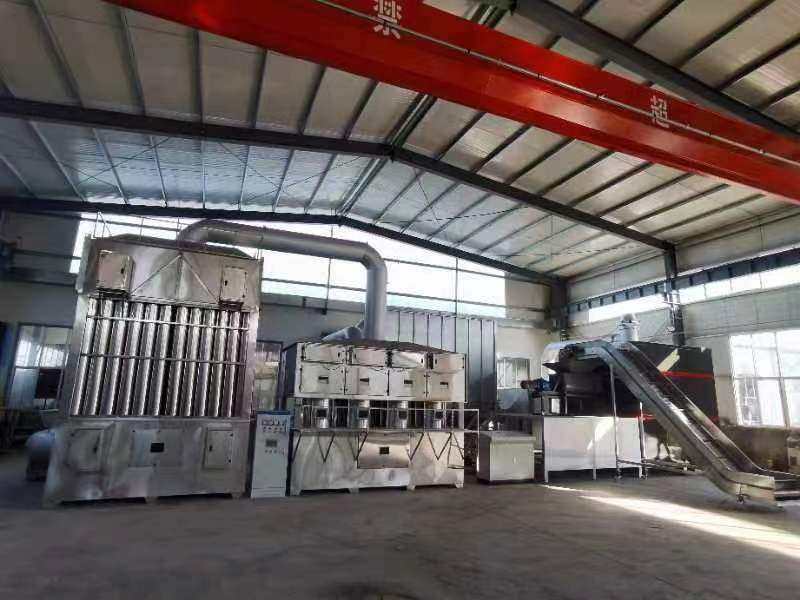
Compared to pyrolysis, oxy-fuel combustion offers the following advantages:
(1) During pyrolysis, organic components in waste can be converted into various usable energy forms such as combustible gases and tar, resulting in better economic efficiency;
(2) The lower air coefficient during gasification significantly reduces flue gas emissions, improves energy utilization, reduces nitrogen oxide emissions, and decreases investment and operating costs for flue gas treatment equipment;
(3) Under a reducing atmosphere, metals are not oxidized, facilitating recycling. Furthermore, metals such as Cu and Fe are less likely to generate catalysts that promote dioxin formation;
(4) The flue gas produced by high-temperature oxy-fuel combustion contains less heavy metals and dioxins, resulting in less secondary pollution, simplified pollution control, and greater environmental safety.
Once the oxy-fuel incinerator is operating stably, the internal waste is divided into four stages from top to bottom: a drying layer, a gasification layer, a red carbon layer, and an ash layer. Red Carbon Layer (Combustion Layer): A stable red carbon layer, approximately 500mm thick, at a temperature of 600℃, provides stable heat energy for the gasification and drying of the upper layers.
Pyrolysis Gasification Layer: After combustion and drying, the waste absorbs the heat energy from the red carbon layer and gasifies to produce combustible hydrocarbon gases such as H2, CO, CH4, and C2H6. Under oxygen-deficient conditions, the concentration of combustible gases reaches its optimal level at a temperature of 500℃ to 600℃.
C + CO2 = 2CO H2O + C = H2 + CO C + 2H2 = CH4 CO + H2O = CO2 + H2
Drying Layer: The drying chamber is located in the upper part of the furnace body. Flue gas is extracted from the top, accelerating the drying of the material.
Ash Layer: After the material in the red carbon layer is fully burned, ash is formed. After high-temperature harmless treatment, it can be used as roadbed filler or for designated landfill. A certain amount of ash is removed daily after normal use.
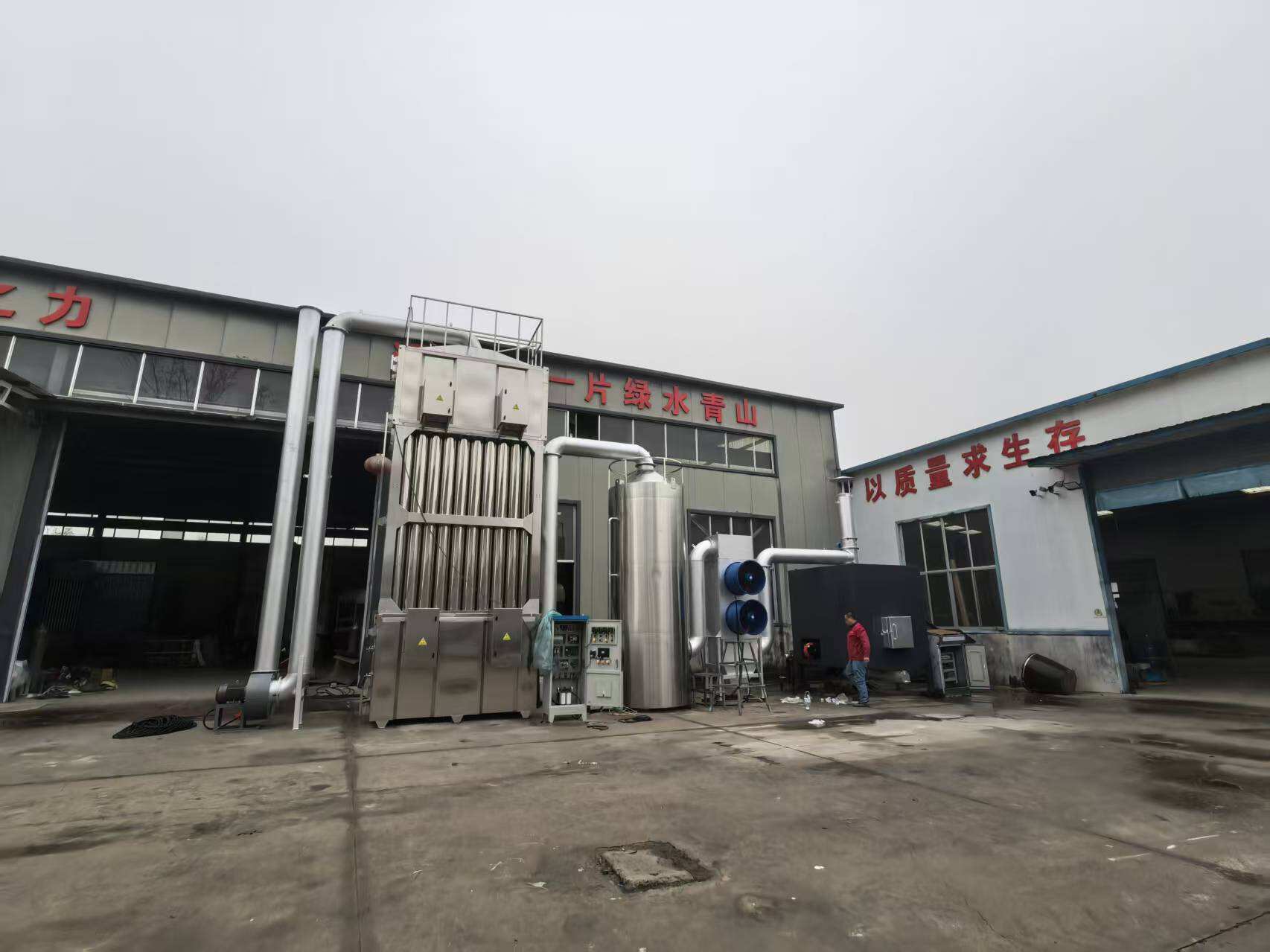
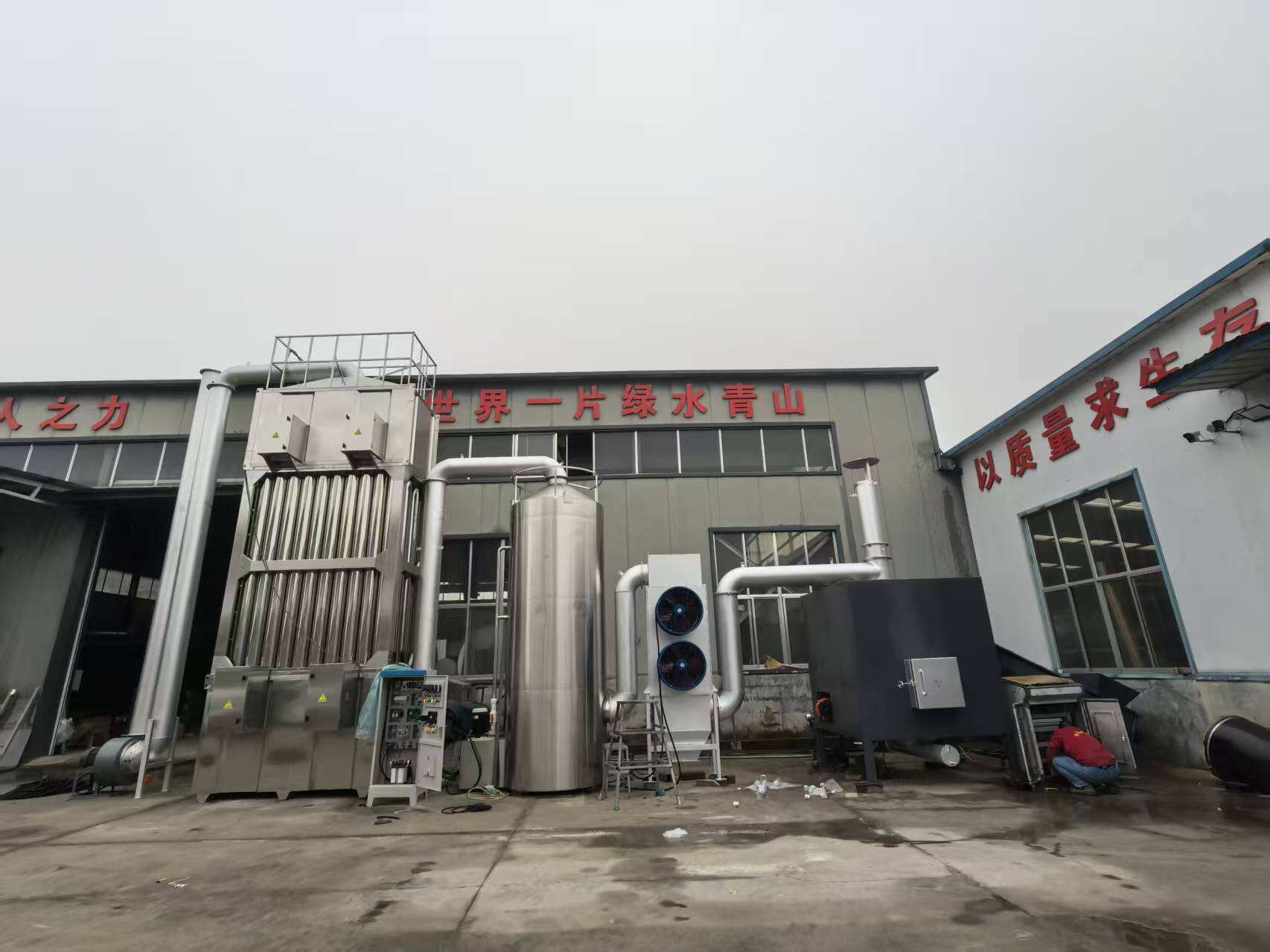
System Descriptions: Feeding System:
Primary feeding: Stainless steel chain conveyor, lower permeable plate, frequency conversion continuous feeding, dimensions: 800mm wide x 4500mm long. Secondary feeding: Carbon steel (auger type), feed hopper, windproof cover, sealed connection to the furnace body, dimensions: 400mm diameter x 1800mm long. Incineration system: High-temperature multi-stage vortex incineration: Carbon steel furnace body, internally cast in one piece, aluminum silicate insulation, external sheet metal coating, dimensions: 2000mm x 2000mm x 3000mm. Includes: primary air intake, secondary air heating, oxygen supply fan, pressure display, temperature display. Sensors, thermocouples, automatic igniters, explosion-proof valves, automatic slag discharge (auger type)
Cooling System:
Rapid Cooling: Water-cooled circulation (carbon steel), water pump, cooling tower
Dimensions: 3500mm x 1200mm x 1500mm
Flue Gas Treatment System:
Desulfurization and Denitrification (Wet Method): Three-layer spray system, submersible pump, reagent tank, 2.2KW
Dimensions: 800mm x 3000mm
Secondary Spray System: Cyclone tower, three-layer filter, gas cyclone plate, 3KW
Dimensions: 2400mm x 1500mm x 3000mm
Water-Vacuum Separator: 8-disc dynamic interception, 80W Dimensions: 1000mm x 1300mm x 1300mm
High-voltage wet electrostatic precipitator: Automatic cleaning, 12KW, dimensions 3200mm x 3200mm x 4800mm
Bag filter: Carbon steel, dimensions 2200mm x 1800mm x 4500mm