
 EN
EN
 AR
AR
 BG
BG
 FR
FR
 DE
DE
 HI
HI
 IT
IT
 PL
PL
 PT
PT
 RU
RU
 ES
ES
 TL
TL
 IW
IW
 ID
ID
 UK
UK
 VI
VI
 TH
TH
 TR
TR
 FA
FA
 MS
MS
 UR
UR
 BN
BN
 KM
KM
 LO
LO
 PA
PA
 MY
MY
 KK
KK
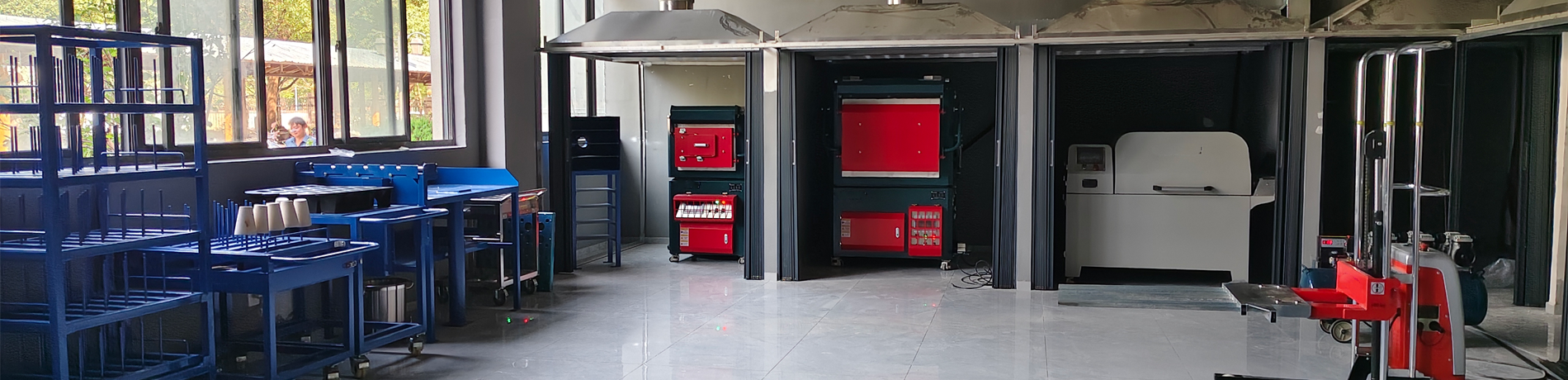
The main reagents used in fire assay and their functions
Fire assaying involves adding various reagents, which separate the precious metal to be determined from the matrix components of the sample through high-temperature melting. These reagents serve different functions. Some, through chemical reactions at high temperatures, can capture precious metals in the sample; these are called trapping agents. Others, called fluxing agents, can melt the sample and combine with the matrix components to form slags such as silicates and borates. Assaying reagents are categorized into seven types based on their role in the smelting process: fluxes, reducing agents, oxidizing agents, desulfurizers, sulfiding agents, trapping agents, and capping agents. Some reagents have a single purpose, such as SiO2, which functions solely as an acidic flux, while others have multiple uses, such as PbO, which functions as both an alkaline flux, a trapping agent, and a desulfurizer.
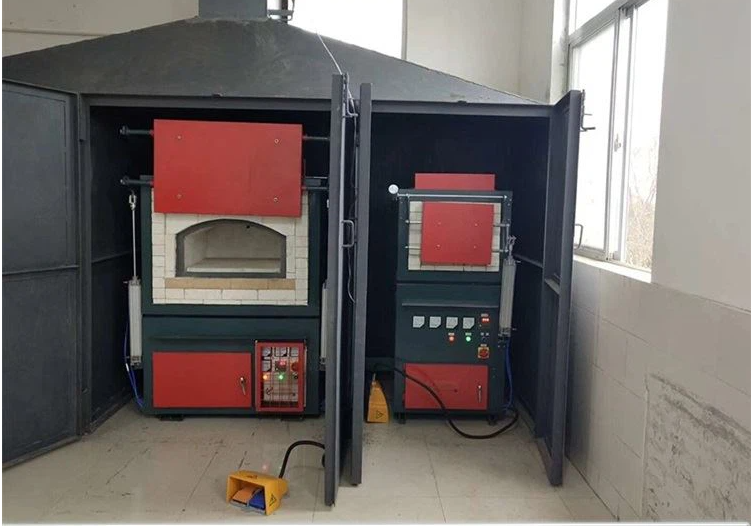
Flux
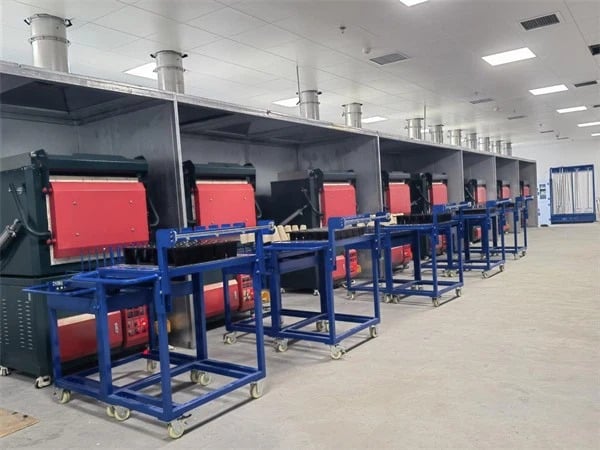
The function of a flux is to melt refractory matrix components in a sample, such as Al2O3, CaO, or silicates, and form a fine slag, thereby decomposing the sample. Fluxes are categorized by chemical properties as acidic, alkaline, and neutral.
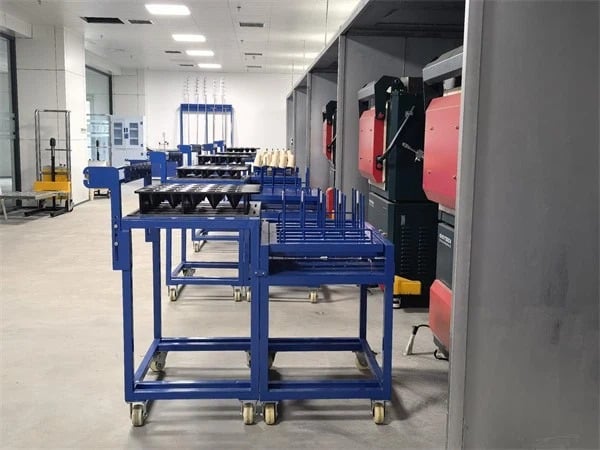
1. Silicon dioxide, also known as quartz powder, is a highly acidic flux.
2. Glass powder is a commonly used acidic flux that can be used in place of silica powder. In addition to the acidic SiO2, glass powder also contains alkaline components such as CaO and Na2O. Therefore, its acidity is weaker than that of quartz powder. Generally, 2-3g of glass powder is equivalent to 1g of SiO2. It is usually made from flat glass, which is washed, dried, and then ground in a mill to 0.246mm-0.175mm.
3. Borax is a reactive and fusible acidic flux. During smelting, it begins to lose its water of crystallization at 350°C and expands rapidly. Therefore, using excessive borax in the batch can easily cause the material to overflow during smelting, resulting in the loss of the sample in the crucible. Borax can form borates with many metal oxides, and their melting points are lower than those of the corresponding silicates. For example, the melting point of CaSiO2 is 1540℃, the melting point of Ca2SiO4 is 2130℃, and the melting point of CaO·B2O3 is only 1154℃. Adding borax to the batch can effectively lower the melting point of the slag.
Recommended Products






Hot News
-
MOREMINE (Saudi Arabia) Partners with JZJ TEST to Deploy Custom Mobile Containerized Sample Preparation & Analysis Laboratory
2026-10-22
-
Across Continents, A Shared Pursuit of Precision | Zimbabwe ZMF Client Visits JZJ TEST to Inspect Containerized Sample Preparation + Fire Assay + Analysis System
2026-09-30
-
Ethiopia Fire Assay Experiment 4: Sample Fusion, Cupellation, and Tool Set—Achieving precise enrichment and witnessing the "rebirth through fire" of precious metals.
2026-08-31
-
Daily Maintenance and Care of a Refractoriness under Load and Creep Tester
2026-08-27
-
Revolutionizing Lab Efficiency: How the HNJC-T4A Redefines XRF Sample Preparation
2026-08-10
-
How to extend the service life of a high-temperature creep tester? Factors affecting service life.
2026-07-21
-
How do you choose the right high-temperature creep tester for softening under load?
2026-07-09
-
A Powerful Partnership: Eritrea Gold Mining Company Adopts Advanced JZJ TEST Fire Assay Equipment, Driving New Standards in Gold Refining and Testing
2026-07-02
-
Overseas Testing Capabilities Upgraded: China 15MCC’s Indonesian Subsidiary Introduces Full-Scale Fire Assay Equipment
2026-06-15
-
From Powder to Data: Unveiling the Secrets of the Perfect Pairing of Fusion Sample Analyzer and Spectrometer for Elemental Analysis
2026-06-09


