
 EN
 AR
 BG
 FR
 DE
 HI
 IT
 PL
 PT
 RU
 ES
 TL
 IW
 ID
 UK
 VI
 TH
 TR
 FA
 MS
 UR
 BN
 KM
 LO
 PA
 MY
 KK
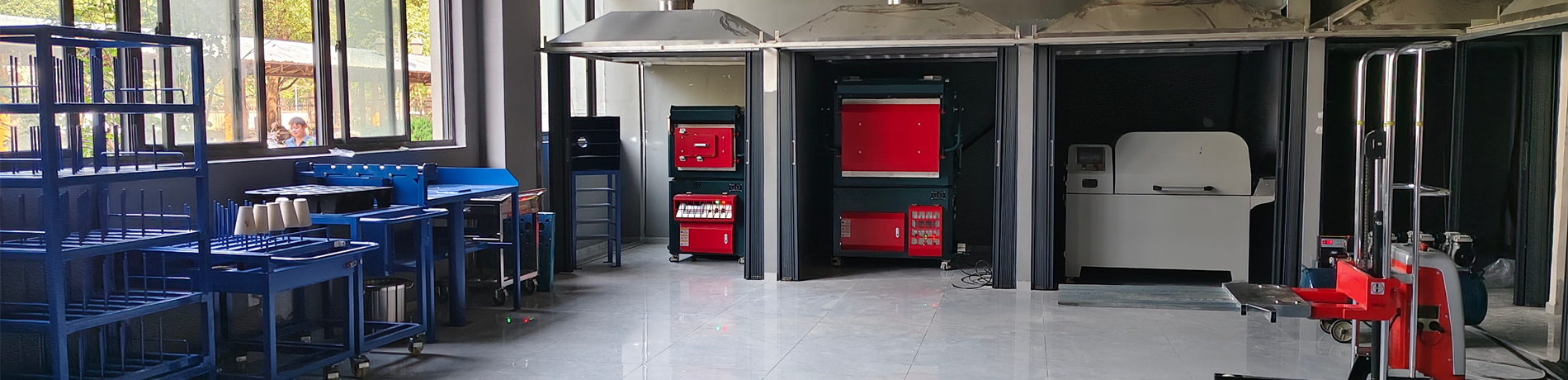
Features of the Gold Test Ash Blowing Furnace
The fire-based gold-ash blowing furnace is a mysterious method involving esoteric studies, alchemy, and artifact crafting. Its methods are highly unique, requiring mastery of specific skills and techniques. Furthermore, it demands a high degree of purity, requiring not only mental discipline but also strict adherence to physical and environmental standards. For example, not a single drop of incense can be missing, and the equipment must not be contaminated.
The fire-based gold-ash blowing furnace is also a comprehensive system. Besides skills and methods, it demands a certain spiritual境界 (state of being/level of attainment), aiming not only for alchemy and artifact crafting but also for achieving a higher level of life experience.
The fire-based gold-ash blowing furnace is a common laboratory device, primarily used for drying, ashing, and purging samples, greatly facilitating the study of the chemical and physical properties of substances. The following details the method of using the fire-based gold-ash blowing furnace.

First, the sample to be tested is placed in the fire-based gold-ash blowing furnace and heated to the required temperature. After the sample is ashed, the blower is turned on to blow out the ash, which is then collected in the ash collector. The fire-based gold-ash blowing furnace can also be used to dry samples. The sample to be dried is placed in a flame ashes-blowing furnace and heated to the required temperature to dry it. Flame ashes-blowing furnaces can help analyze the composition of samples. After heating, the generated gases and ash are analyzed to determine the sample's composition.
In some experiments, oxidation experiments are required, and a flame ashes-blowing furnace can be used in these cases. The substance to be oxidized is placed in the furnace and heated to the required temperature to perform the oxidation experiment. Flame ashes-blowing furnaces can also be used for degradation experiments. The sample to be degraded is placed in the furnace, heated to the required temperature, and then the substance is analyzed and studied. Besides the above, flame ashes-blowing furnaces can be applied to many other experiments, such as catalytic reaction experiments, combustion experiments, and substance purification experiments. In short, flame ashes-blowing furnaces are common laboratory equipment that can conveniently and quickly complete many experiments. Safety precautions must be taken during use to ensure experimental success.
Recommended Products




Hot News
-
Refractoriness Under Load (RUL) & Creep Tester vs. Standard Dilatometer: Key Differences and Selection Guide
2026-11-11
-
Multi-function Fusion Bead Maker: 5 Features to Expand Your Experimental Possibilities
2026-11-06
-
Direct-Reading Spectrometers vs. Sample Fusion Machines: Understanding the Key Differences and Selection Strategies for These Two Essential Laboratory Instruments
2026-10-26
-
Across Continents, A Shared Pursuit of Precision | Zimbabwe ZMF Client Visits JZJ TEST to Inspect Containerized Sample Preparation + Fire Assay + Analysis System
2026-09-30
-
Ethiopia Fire Assay Experiment 4: Sample Fusion, Cupellation, and Tool Set—Achieving precise enrichment and witnessing the "rebirth through fire" of precious metals.
2026-08-31
-
Daily Maintenance and Care of a Refractoriness under Load and Creep Tester
2026-08-27
-
Analysis of the Effect of Heating Rate on Test Results of a High-Temperature Refractoriness-under-Load and Creep Tester
2026-08-21
-
Revolutionizing Lab Efficiency: How the HNJC-T4A Redefines XRF Sample Preparation
2026-08-10
-
How to extend the service life of a high-temperature creep tester? Factors affecting service life.
2026-07-21
-
How do you choose the right high-temperature creep tester for softening under load?
2026-07-09


