
 EN
 AR
 BG
 FR
 DE
 HI
 IT
 PL
 PT
 RU
 ES
 TL
 IW
 ID
 UK
 VI
 TH
 TR
 FA
 MS
 UR
 BN
 KM
 LO
 PA
 MY
 KK
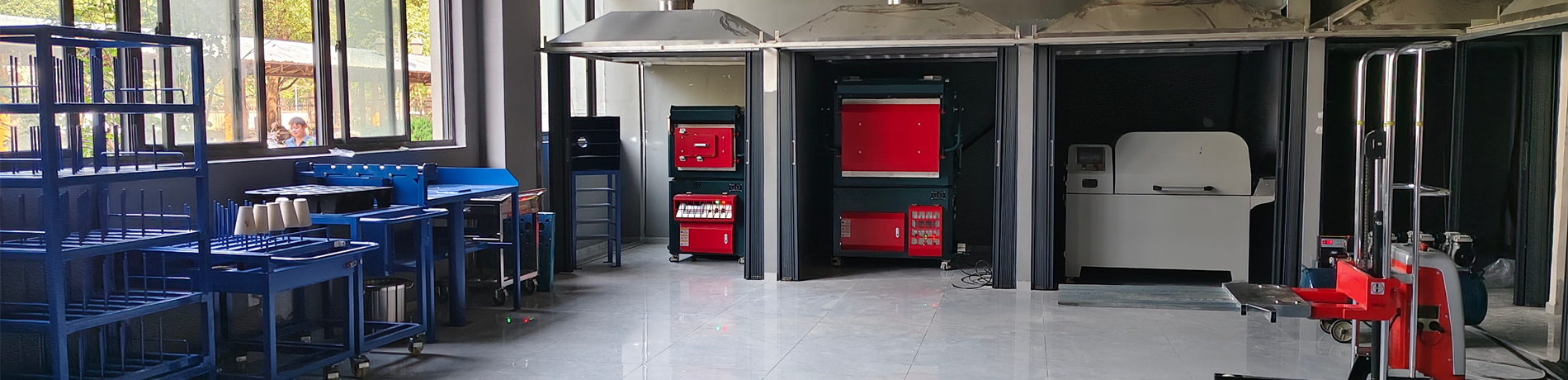
Refractoriness Under Load (RUL) & Creep Tester vs. Standard Dilatometer: Key Differences and Selection Guide
In high-temperature industries such as refractories, technical ceramics, glass, and metallurgy, the thermal deformation behavior of materials is a critical indicator of product lifespan, structural integrity, and operational safety.
Laboratories frequently utilize two primary categories of testing instruments: Standard Thermal Dilatometers and High-Temperature Refractoriness Under Load (RUL) & Creep Testers. Although both characterize thermal deformation, significant differences exist in their operating principles, loading conditions, and application scenarios.
1. Fundamental Differences in Operating Principles
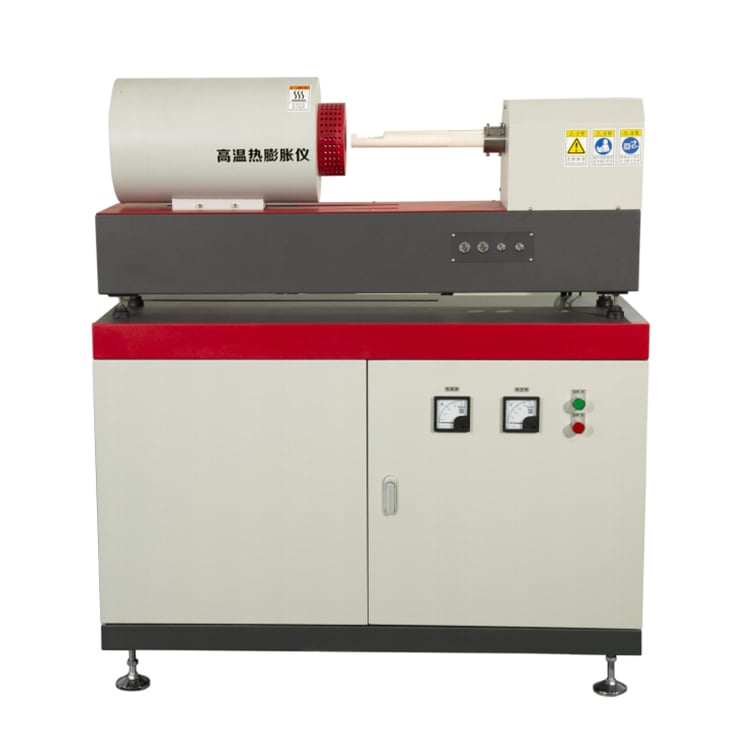
- Standard Thermal Dilatometer: Free Thermal Expansion (Zero / Negligible Load)
Operating in accordance with ASTM E228 or GB/T 7320 standards, it measures the linear dimensional changes of a specimen as a function of temperature under zero external load (or minimal contact pressure from the pushrod).
* Key Outputs: Coefficient of Thermal Expansion (CTE), thermal expansion curves, phase transition temperatures.
* Primary Application: Basic thermophysical characterization under stress-free conditions.
- RUL & High-Temperature Creep Tester: Coupled Thermal and Mechanical Stress
Designed per ISO 1893, ISO 3187, ASTM C832, or GB/T 5989 standards, this instrument applies a defined mechanical load (typically 0.05 to 0.2 MPa or higher) onto the specimen while simultaneously heating it, continuously recording compressive deformation.
* Key Outputs: Softening temperatures (e.g., T0.6, T1.0), isothermal compressive creep rate, and residual deformation.
* HET Instrument Advantage: Equipped with a closed-loop servo loading system, maintaining load accuracy within ±1% to ensure reliable and repeatable long-term creep data.
2. Key Technical Parameters Comparison
- Loading Capacity:
* Dilatometer: Passive contact force only (< 0.1 N).
* RUL & Creep Tester: Active servo or precision dead-weight system delivering continuous 0–500 N adjustable load.
- Temperature Range & Thermal Design:
* Dilatometer: Room Temperature (RT) to 1600°C / 1700°C with lightweight furnace design.
* RUL & Creep Tester: RT to 1650°C / 1700°C with high-rigidity loading rods and uniform thermal field engineered for load-bearing resistance.
- Displacement Measurement & Stability:
* Dilatometer: Typical stroke 0–5 mm with resolution up to 0.01–0.1 μm.
* RUL & Creep Tester: Extended stroke (≥ 10 mm) with high-precision optical linear scale and PID digital compensation, keeping zero-point drift below 1 μm/h during long creep cycles.
- Data Output:
* Dilatometer: Thermal expansion curves and CTE values.
* RUL & Creep Tester: Multi-dimensional outputs including temperature-deformation curves, creep rates, softening points, and residual strain.
3. Application Scenarios & Equipment Selection
- When to Select a Standard Dilatometer:
Best suited for fundamental research and routine QC where materials do not bear mechanical loads during operation (e.g., evaluating glass-to-metal sealing compatibility, electronic substrate thermal stress, and sintering shrinkage kinetics). It offers a cost-effective and straightforward solution.
- When to Select an RUL & Creep Tester:
Essential for materials serving under combined high temperatures and heavy loads (e.g., blast furnace linings, glass melting furnace walls, ceramic kiln furniture, and petrochemical reformer linings).
HET Instrument systems support multi-station synchronized testing, significantly enhancing testing throughput and helping manufacturers mitigate kiln failure risks caused by material softening or creep.
4. Conclusion
The selection between these two instruments comes down to one question: "Does the material bear mechanical stress in its operating environment?"
- For unconstrained thermal expansion/contraction measurement, a Standard Dilatometer is the optimal and economical choice.
- For evaluating long-term load-bearing resistance, softening limits, and creep behavior under thermal-mechanical stress, an RUL & Creep Tester is indispensable.
HET Instrument provides a comprehensive portfolio of high-temperature testing solutions, from standard configurations to fully automated intelligent systems, fully aligned with international standards.
Recommended Products





Hot News
-
Refractoriness Under Load (RUL) & Creep Tester vs. Standard Dilatometer: Key Differences and Selection Guide
2026-11-11
-
Multi-function Fusion Bead Maker: 5 Features to Expand Your Experimental Possibilities
2026-11-06
-
Direct-Reading Spectrometers vs. Sample Fusion Machines: Understanding the Key Differences and Selection Strategies for These Two Essential Laboratory Instruments
2026-10-26
-
Across Continents, A Shared Pursuit of Precision | Zimbabwe ZMF Client Visits JZJ TEST to Inspect Containerized Sample Preparation + Fire Assay + Analysis System
2026-09-30
-
Ethiopia Fire Assay Experiment 4: Sample Fusion, Cupellation, and Tool Set—Achieving precise enrichment and witnessing the "rebirth through fire" of precious metals.
2026-08-31
-
Daily Maintenance and Care of a Refractoriness under Load and Creep Tester
2026-08-27
-
Analysis of the Effect of Heating Rate on Test Results of a High-Temperature Refractoriness-under-Load and Creep Tester
2026-08-21
-
Revolutionizing Lab Efficiency: How the HNJC-T4A Redefines XRF Sample Preparation
2026-08-10
-
How to extend the service life of a high-temperature creep tester? Factors affecting service life.
2026-07-21
-
How do you choose the right high-temperature creep tester for softening under load?
2026-07-09


