
 EN
EN
 AR
AR
 BG
BG
 FR
FR
 DE
DE
 HI
HI
 IT
IT
 PL
PL
 PT
PT
 RU
RU
 ES
ES
 TL
TL
 IW
IW
 ID
ID
 UK
UK
 VI
VI
 TH
TH
 TR
TR
 FA
FA
 MS
MS
 UR
UR
 BN
BN
 KM
KM
 LO
LO
 PA
PA
 MY
MY
 KK
KK
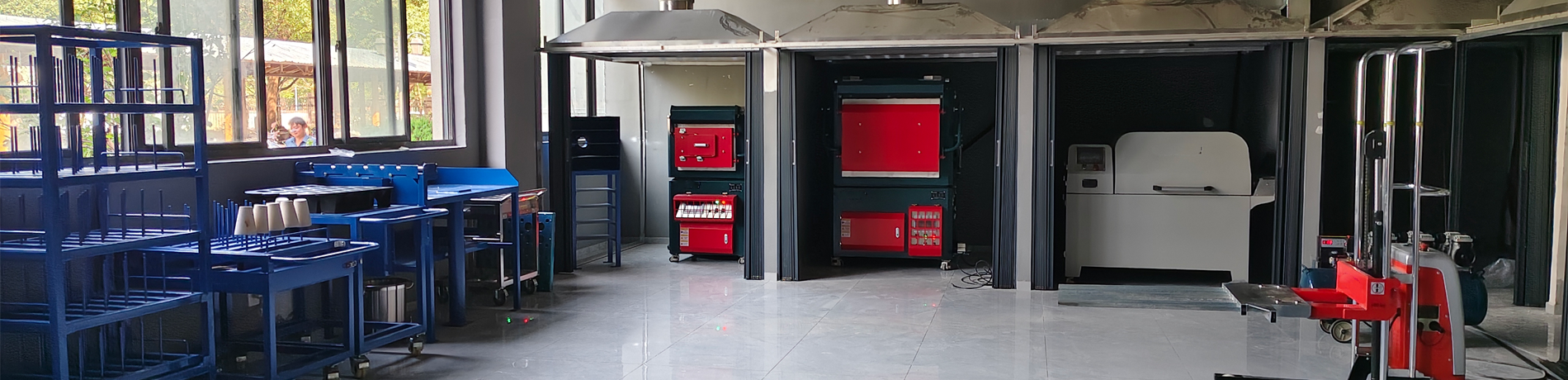
Understanding Fusion Sample Preparation for X-ray Fluorescence Analysis
There are two sample preparation methods at present: tableting and melting. The melting method is recognized as the advanced sample preparation method in the world. Tableting: After the sample is crushed, it is pressed into a disc and can be analyzed. The sample preparation time is short, and the report can be issued in 5 minutes. However, due to the particle size effect, matrix effect and mineral effect, the analysis accuracy is low.
1. Advantages of melting method for sample preparation:
Currently, there are two sample preparation methods: tablet pressing and melting method, and melting method is recognized as the world's advanced sample preparation method.
Plate pressing method: After the sample is crushed, it is pressed into a disc and can be analyzed; the sample preparation time is short, and the report can be issued in 5 minutes. However, due to the particle size effect, matrix effect and mineral effect, the analysis accuracy is low.
Melting method: The sample and the boride flux react chemically under high temperature heating, and the elements in the sample are converted into borates to obtain uniform, flat, smooth and transparent glass sheets; and the particle size effect, matrix effect and mineral effect can be reduced, and the analysis accuracy is high.
3. Basic process of melting sample preparation:
1) Sample pretreatment:
A. The grinding particle size does not exceed 200 mesh.
B. After burning at 600-700℃, store in a dryer.
2) Sample weighing: The sample weighing accuracy is required to reach 0.1 mg.
3) Formula: Different samples must follow different formula methods. Such as:
Iron ore: ore sample/flux = 1/15
Bauxite: ore sample/flux = 1/5
4) Mixing: Must be mixed evenly with a glass rod and immediately placed in a dryer.
5) Melting sample: According to different ore samples, set the corresponding temperature (accuracy ±1℃) and time (accuracy ±0.001 seconds).
6) Taking slices: Do not touch the measured surface, put it in a drying container for standby.
4. Melting sample preparation is suitable for the following industries:
1) Mining: ore, concentrate, dust, metal oxide film, slag, etc.
2) Kiln industry: cement, limestone, dolomite, glass, quartz, clay, refractory materials, etc.
3) Iron and steel industry: iron ore, coal, converter, blast furnace, electric furnace slag, etc.
4) Nonferrous industry: alumina, bauxite, copper ore, etc.
5) Chemical industry: catalysts, polymers, etc.
6) Geological soil: rocks and soil.
Recommended Products





Hot News
-
Ethiopia Fire Assay Experiment 4: Sample Fusion, Cupellation, and Tool Set—Achieving precise enrichment and witnessing the "rebirth through fire" of precious metals.
2026-08-31
-
Daily Maintenance and Care of a Refractoriness under Load and Creep Tester
2026-08-27
-
Revolutionizing Lab Efficiency: How the HNJC-T4A Redefines XRF Sample Preparation
2026-08-10
-
How to extend the service life of a high-temperature creep tester? Factors affecting service life.
2026-07-21
-
How do you choose the right high-temperature creep tester for softening under load?
2026-07-09
-
A Powerful Partnership: Eritrea Gold Mining Company Adopts Advanced JZJ TEST Fire Assay Equipment, Driving New Standards in Gold Refining and Testing
2026-07-02
-
Overseas Testing Capabilities Upgraded: China 15MCC’s Indonesian Subsidiary Introduces Full-Scale Fire Assay Equipment
2026-06-15
-
From Powder to Data: Unveiling the Secrets of the Perfect Pairing of Fusion Sample Analyzer and Spectrometer for Elemental Analysis
2026-06-09
-
Spanning Ten Thousand Miles, Quality Verified | JZJ TEST Fire Assay Laboratory Equipment Successfully Delivered to Russian Client
2026-05-26
-
How is the temperature control accuracy of the high-temperature load softening tester?
2026-05-12


