
 EN
EN
 AR
AR
 BG
BG
 FR
FR
 DE
DE
 HI
HI
 IT
IT
 PL
PL
 PT
PT
 RU
RU
 ES
ES
 TL
TL
 IW
IW
 ID
ID
 UK
UK
 VI
VI
 TH
TH
 TR
TR
 FA
FA
 MS
MS
 UR
UR
 BN
BN
 KM
KM
 LO
LO
 PA
PA
 MY
MY
 KK
KK
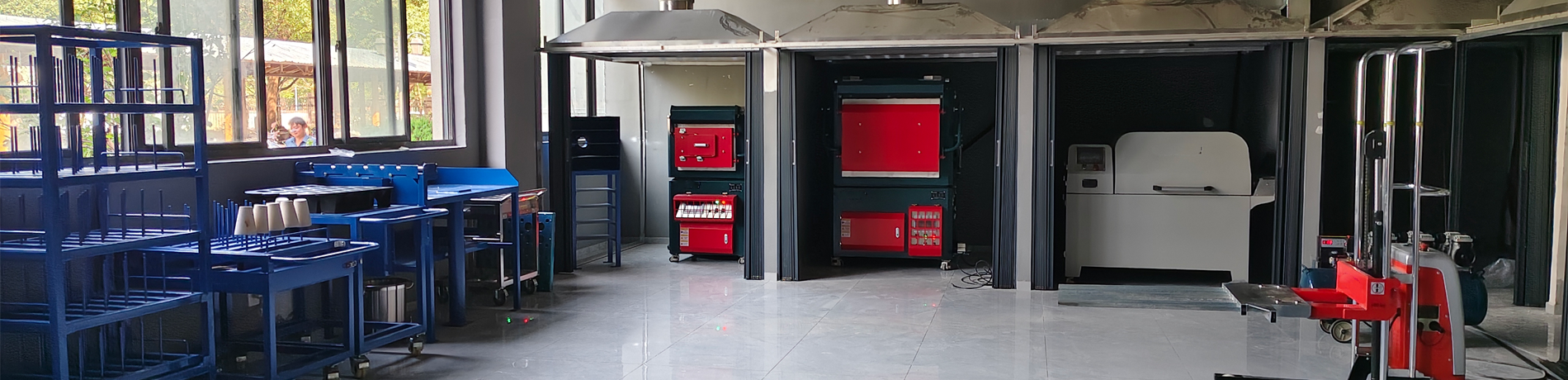
XRF flux analysis: the role and advantages of anhydrous lithium tetraborate
XRF flux(XRF Analysis Solvent) is a commonly used analysis technology widely used in ores, metals, ceramics and other fields. When performing XRF analysis, the sample usually needs to be melted first to completely dissolve the elements into a liquid state to ensure accurate analysis results. The function of the sample melter is to heat the sample to a high temperature to melt it.
Anhydrous lithium tetraborate is a commonly used flux, which plays an important role in XRF flux analysis. First, anhydrous lithium tetraborate has a low melting point and high heat capacity, allowing it to quickly heat samples to high temperatures. Secondly, anhydrous lithium tetraborate has good fluidity and wettability at high temperatures, and can effectively react with the sample to dissolve elements in the sample into liquid. In addition, anhydrous lithium tetraborate can also reduce the oxidation reaction on the sample surface and ensure the accuracy of analysis results.
Using anhydrous lithium tetraborate as a flux also has the following advantages. First of all, it can react with most elements and has a wide range of applications. Secondly, the melting point of anhydrous lithium tetraborate is relatively low and will not cause significant loss or oxidation of elements in the sample. In addition, anhydrous lithium tetraborate can also reduce the operating temperature and time of the sample melter and improve analysis efficiency.
In short, the sample melter plays a vital role in XRF flux analysis, and anhydrous lithium tetraborate, as a high-quality flux, can effectively help the sample melt, dissolve the elements in the sample, and ensure accurate analysis results. For ores, metals, ceramics and other fields that require XRF analysis, using anhydrous lithium tetraborate as a flux will be a wise choice.
Recommended Products




Hot News
-
Across Continents, A Shared Pursuit of Precision | Zimbabwe ZMF Client Visits JZJ TEST to Inspect Containerized Sample Preparation + Fire Assay + Analysis System
2026-09-30
-
Daily Maintenance and Care of a Refractoriness under Load and Creep Tester
2026-08-27
-
Revolutionizing Lab Efficiency: How the HNJC-T4A Redefines XRF Sample Preparation
2026-08-10
-
How to extend the service life of a high-temperature creep tester? Factors affecting service life.
2026-07-21
-
How do you choose the right high-temperature creep tester for softening under load?
2026-07-09
-
A Powerful Partnership: Eritrea Gold Mining Company Adopts Advanced JZJ TEST Fire Assay Equipment, Driving New Standards in Gold Refining and Testing
2026-07-02
-
Overseas Testing Capabilities Upgraded: China 15MCC’s Indonesian Subsidiary Introduces Full-Scale Fire Assay Equipment
2026-06-15
-
From Powder to Data: Unveiling the Secrets of the Perfect Pairing of Fusion Sample Analyzer and Spectrometer for Elemental Analysis
2026-06-09
-
Spanning Ten Thousand Miles, Quality Verified | JZJ TEST Fire Assay Laboratory Equipment Successfully Delivered to Russian Client
2026-05-26
-
How is the temperature control accuracy of the high-temperature load softening tester?
2026-05-12


